
GEOMETRIC FOUNDATION:verifiable governance architecture based invariant corridors that constrain system evolution while preserving operator continuity
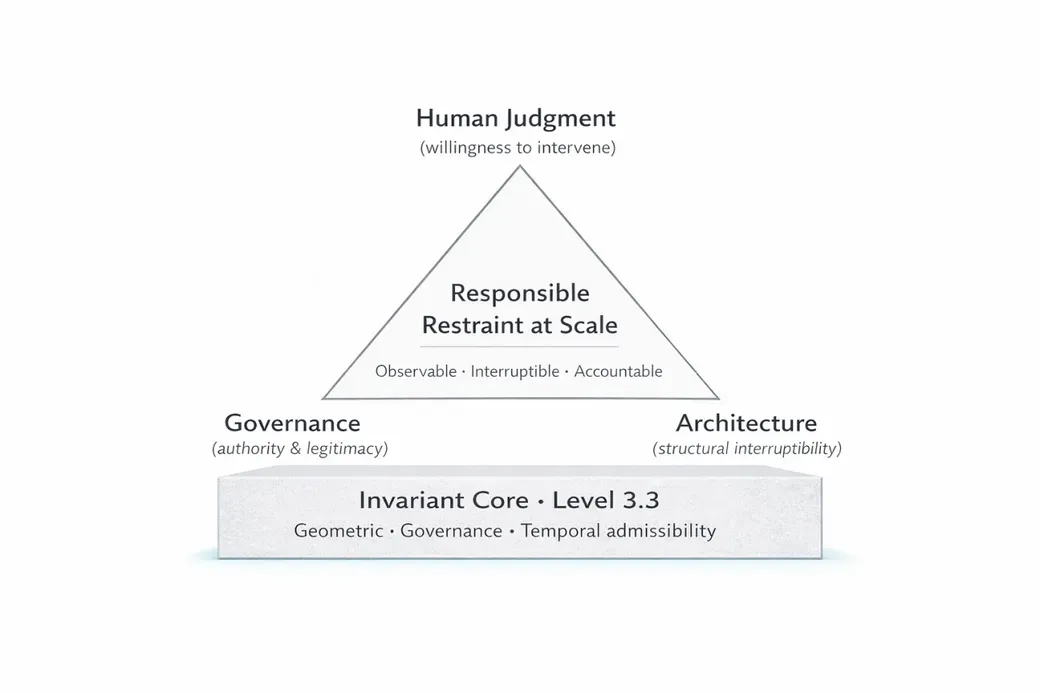
The Level 3.3 (FROZEN baseline) framework establishes a rigorous geometric foundation for system integrity through an invariant corridor that dynamically contracts under strain and expands upon recovery, with all state-changing operations mandatorily authorized by the Δ-Matrix. This mathematically categorical structure distinguishes geometric invariants from tunable parameters, ensuring that the bounded contraction operator, authority-neutral centering, and tri-binding admissibility (geometric, governance, temporal) remain absolute. The architecture supports a three-tiered pyramid: a structural base ensuring observability, interruptibility, and accountability; a governance layer providing authority and legitimacy; and an apex representing the ultimate willingness to intervene through responsible restraint at scale. The core's structural closure is now preserved through an offline public verification bundle, enabling independent validation of the frozen baseline without network dependency, ensuring that the foundational invariants remain cryptographically intact and immutable for all future implementations and extensions. Zenodo. https://doi.org/10.5281/zenodo.18822553
Geometric Foundation Services

News Letter Archives
latest research & opinions featuring questions and answers to deepen knowledge and foster community discussion around the Geometric Foundation.

Extension Corridors Archive
BRaiNS v2.0 (TCB) v2.6.1+ BRAiNs & Public Verify offline;
UEF_G (Unified Evolutionary Framework);
Midrhashi Semantic convergence
FEDI, Twisted Graph Laplacians, and Beyond Containment 4.0 (GG2.2) v1.2 Geometric Compatibility
Access a curated archive detailing implications derived from CORE and/or GG 2.2, presented as new, non-CORE-dependent ARTIFACTS with full descriptions.
Stack Theoretical Foundations
The Geometric Foundations framework (Level 3.3) is operationally grounded upon four foundational stacks: Binary Formalization establishes geometric containment via toroidal closures (Medesani, M. (2025). Zenodo. https://doi.org/10.5281/zenodo.18055073); Simulation ESC proves finite resources enable containment within infinite hierarchies (Medesani, M. (2025–2026). Zenodo. https://doi.org/10.5281/zenodo.18304633); Geometric Containment defines absolute boundaries (c₀, Lmax) and invariants (Medesani, M. (2025–2026). Zenodo https://doi.org/10.5281/zenodo.18375294); Beyond Containment formalizes Coherence Engineering (Γ) for human-AGI symbiosis (Medesani, M (2026) Zenodo. https://doi.org/10.5281/zenodo.18860152). These stacks provide the logical, metrological basis for the pyramid architecture, transforming geometric philosophy into verifiable governance.

Interactive Podcast and YouTube's video
SPOTIFY Podcast
Lesson #1: Beyond Containment 4.0;
Lesson #2: Geometric Containment 2.2
Lesson #4: Definition of Binary Consciousness 6.12
Geometry Foundations – Podcast Series on the 4 Fundamental Pillars The podcasts explain, in very simple language, the concepts underlying the four fundamental pillars of geometric theories. These pillars are: • Definition of Binary Consciousness • ESC Simulation • Containment Geometry • Beyond Containment: Geometry in the Age of AGI Together, these ideas form the foundation of CORE Level 3.3.
YouTube Video's
Video #1: About Beyond Containment in the Era of AGI;
Video #2: Geometric Containment in Nested Simulation Hierarchies;
Video #4: Binary Formalization of Consciousness and Simulations of Being
Geometry Foundations – YouTube Video's Series on the 4 Fundamental Pillars.These pillars are: • Definition of Binary Consciousness • ESC Simulation • Containment Geometry • Beyond Containment: Geometry in the Age of AGI Together, these

VENUES Presentation Speech

VENUES Video Presentation
Gallery
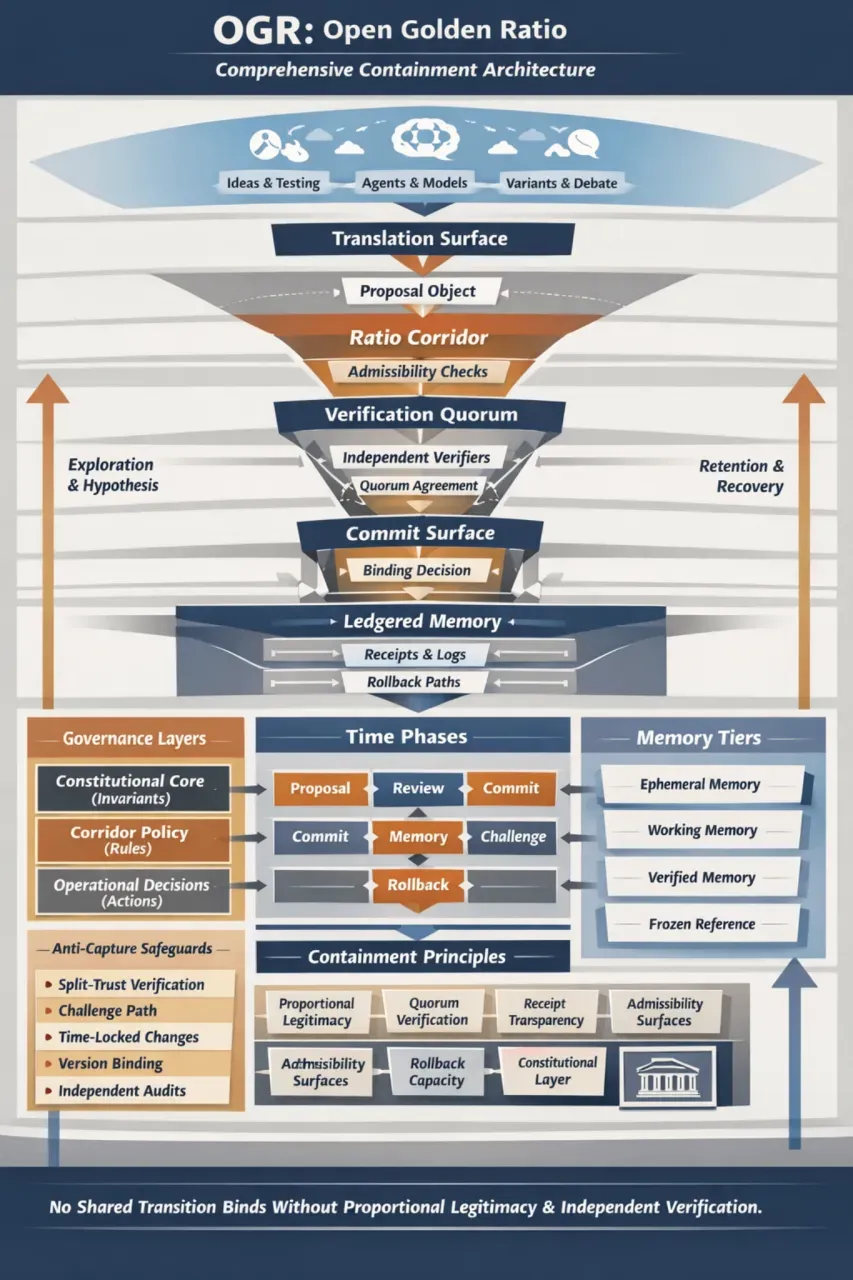
Building foundations, inspiring futures through geometric insight.
Discover the core of geometric innovation!
Team
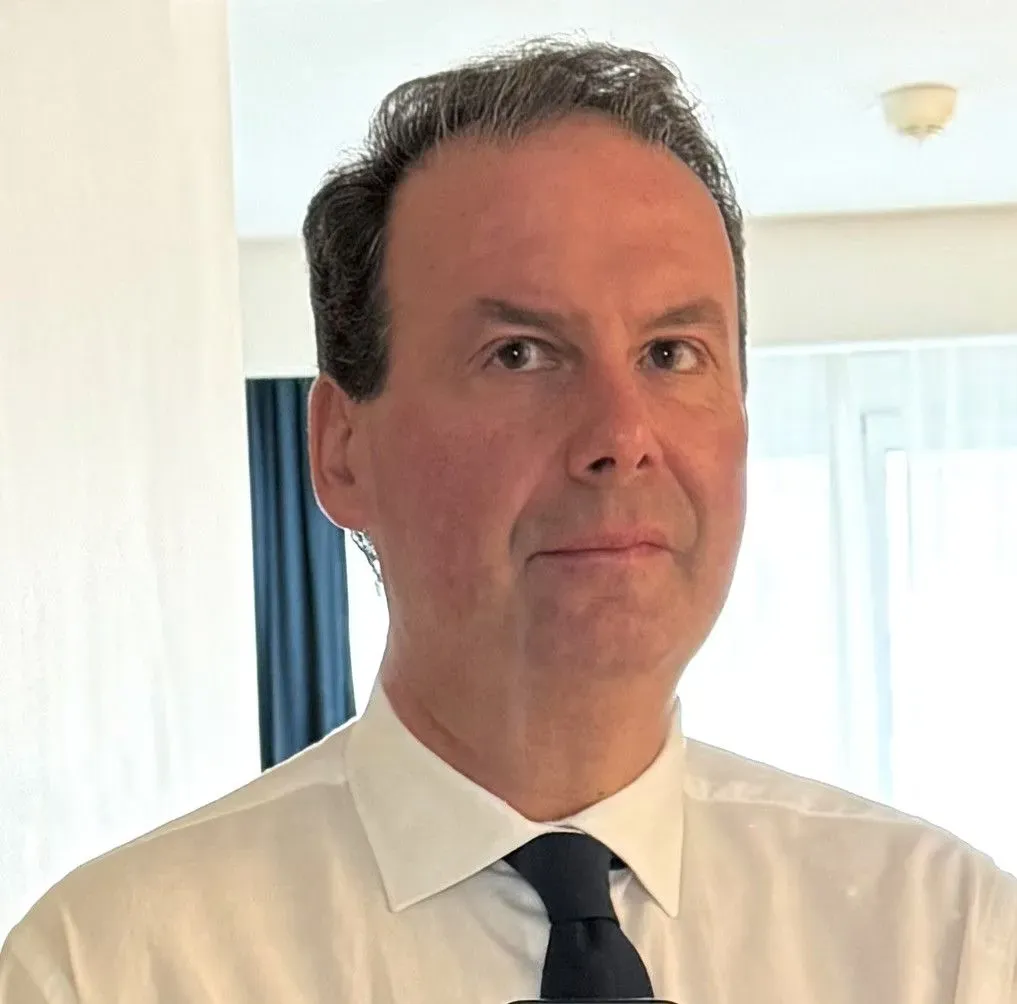
Massimo Medesani
PhD - Core Architecture, Geometric Containment & Foundational
Massimo Medesani is an experienced geometer with expertise in abstract algebra and topology, who leads fundamental research and presentation of key concepts at the Geometric Foundation, Independent Researcher & 1st Coherence Engineer (The Founder)

Jake Macdonald
Architect - Invariant Corridor Architecture and Verification Layer Research
Jake Macdonald Independent, self-directed thinker who works best alone. I focus on understanding how systems behave under pressure and on bringing clarity to messy problems. My work is quiet, practical, and grounded in careful reasoning rather than titles or hype.

Jake McDonough
Research Contributors & Architecture Other contributors & related UEF_G
Founder, SAEONYX – self‑accountable AI runtime for high‑stakes systems | Patent‑pending platform for acquisition. SAEONYX is a self‑accountable AI runtime for high‑stakes systems – the layer that sits under models and agents and forces them to live inside an immutable covenant or die trying. It continuously measures behavior, enforces a hard moral/operational boundary, and kills itself if it crosses red lines, with full forensic logging for regulators and auditors. Under the hood: ~80+ interdependent modules (OS, DSL, ethics kernel, swarm agents, telemetry, licensing shell), a working implementation running on commodity hardware, and a provisional patent filed under SAEONYX Global Holdings LLC.
Author of: UEF_G Framework & SAEONYX Project
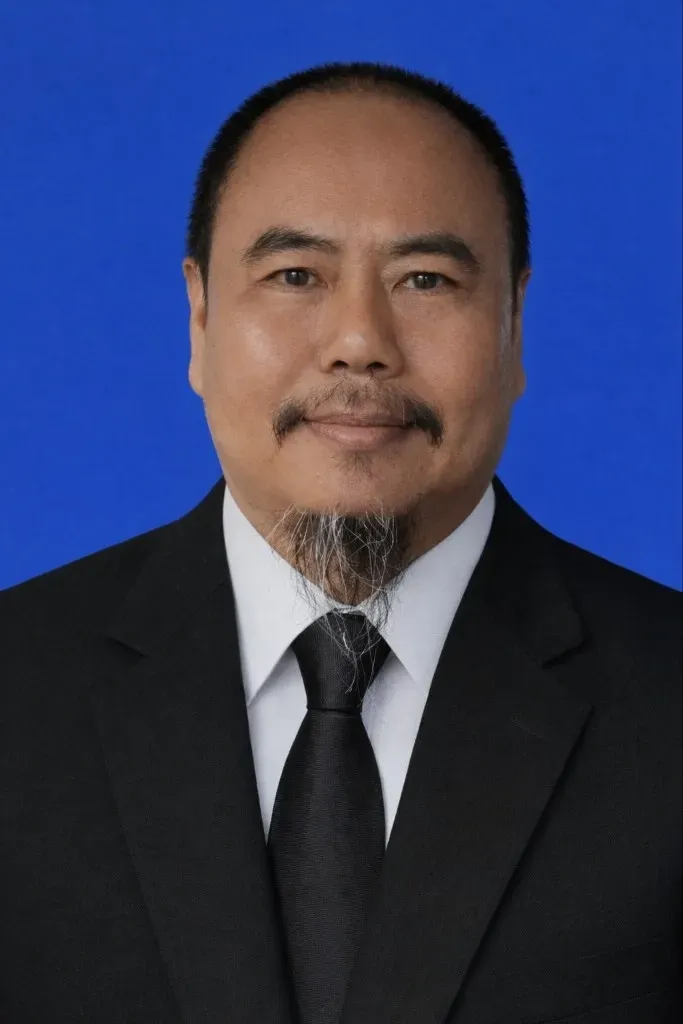
Ali Salihin
Research Contributors & Architecture Other contributors & related BRaINS
As the founder of BRAINS (Bounded Reality AI Neural System), my mission is to solve the most critical challenges in the AI industry today: structural hallucination and energy inefficiency. Through the development of the Reality Anchor Layer (RAL) concept, I have engineered a framework where artificial neural systems do not merely predict data; they validate every output against permanent physical laws and deterministic logic. My strength lies in bridging fundamental philosophy, the laws of nature, and system architecture to create AI that is safe, trustworthy, and built with integrity. I am building a future where technology no longer hallucinates, but instead serves as a precision instrument governed by physical reality. Core Expertise: AI Strategy & System Architecture Reality-Anchored AI Frameworks Cross-Domain Validation Methodology AI Safety & Ethics Strategy"
Author of: TCB Framework & BRaINS Project

Eduardo Filho
Research Contributors Midrashi Semantics-Semantic Architect_Neuro-Symbolic AI
My focus is to design and support architectures where human intention meets intelligent computation — where machines don’t just respond, they resonate. With hands-on experience in business leadership and operational logic, I bring a systems-oriented mindset to every challenge: • Process design that improves efficiency and coherence • Coding logic grounded in human-centered awareness • Cybersecurity thinking based on adaptability and precision • AI integration aligned with creative intelligence Currently exploring pathways to contribute in AI, cybersecurity, and cognitive engineering, helping organizations bridge innovation, ethics, and emergence.
Author: Midrashi Semantics

Paweł Chomiuk
Research Contributor-Creator of the Fion Theory (OTWOFDN)
My research focuses on a fundamental question: can the universe, matter, and consciousness emerge from a single, common informational substrate? To answer this, I am developing the Fionic Substrate Framework (OTWOFDN) – a unified model that integrates fundamental physics with information theory. 🔬 KEY RESEARCH AREAS: Informational physics and foundations of spacetime Emergent spacetime and quantum error correction Hyperbolic geometry and AdS₂ reconstruction Cosmology: unification of dark energy, baryogenesis, and the arrow of time Lindblad evolution and open quantum systems Bayesian model selection in physics 📈 KEY CONTRIBUTIONS: Author of the Fion Theory (S0–S52 series): the first unified informational model of spacetime, matter, and cognition. Developed the concept of "fions" as elementary informational quanta replacing particles and fields. Derived a transfer law reproducing cosmic acceleration without a dark energy parameter. Achieved over 3,000 downloads in 21 days for key works (before a sudden repository ban on Zenodo; appeal in progress). STATUS: Independent Scholar (non-affiliated) Field: Theoretical Physics / Informational Field Theory / Quantum Foundations I invite you to review my work and connect regarding potential collaborations or discussion. NOTE ON REPOSITORY MIGRATION: This collection represents a multi-year research effort. Its initial release of 32 monographs garnered over 3,000 downloads in just one month on the previous repository. Due to this unusually high volume of rapid publications and traffic, the repository's automated anti-spam filters were triggered, necessitating this migration to Figshare/OSF for stable, long-term archival. ORCID: 0009-0005-9416-4771 Email: pkwadratrybnik@gmail.com

Joseph Mancinelli
Research Contributors - QIG Architect | Fusing AI & Æinstein
Independent Theoretical Physicist and AI Creative Producer. working at the intersection of quantum field theory, effective gravity extensions, holography, and spectral operator methods. 2X Keynote Speaker●Astrophysics●Cosmology... I developed QIG (Quantum Informational Gravity), a minimal scalar–tensor framework with falsifiable signatures and reproducible research releases. In parallel, I build full-stack creative projects, short films, music videos, scoring, editing, branding, and AI production pipelines — work as a mortgage broker to pay my bills😎 and continue independent research. I don’t chase hype .. I attempt to Solve the Impossible...

Charles Emmanuel Levine
Independent Corridor Researcher - Quality Management Systems
Giunzione dellEssex, Vermont, Stati Uniti d'America

Allison Hensgen
Independet Corridor Researcher - Founder of Coherence Physics (Δ.72) | Unified Framework Bridging 20 Domains | Resolved 17 Longstanding Problems Coherence-Based Math | Architect of the Coherence Engine™, RootWell & Star, RecoverMargins & StoopidVideos
Reviews
Discover the Geometric Foundation: Core Values and Innovative Insights
Our Core: The Heart of Geometric Foundation
Conclusion and Support for the Architectural Pyramid
In summary, these four stacks provide the logical, metrological, and geometric foundations upon which the architectural pyramid of the primary document (PIRAMID architetture.png) is constructed.
Stacks 1-3 establish why geometric containment is possible and define its absolute limits (c0, Lmax), laying the groundwork for the invariant and the controlled contraction of the corridor.
Stack 4 builds upon these foundations to define how the authority and legitimacy of governance (Governance) can operate within these limits, utilizing the Coherence Functional Γ as a measurement and control instrument, rendering the system Observable • Interruptible • Accountable.
Finally, the apex of the pyramid ("Responsible Restraint at Scale," "Human Judgment") finds its formal justification in the human "imponderable factor" (Stack 2) and the role of the Coherence Engineer (Stack 4) as the ultimate arbiter of symbiotic coherence, empowered to intervene when geometric or coherence boundaries are breached.
The Geometric Foundation (Level 3.3) thus represents the operational and engineered integration of these profound foundational principles, transforming a geometric philosophy into a practical and verifiable governance architecture.
Offline public verification bundle-a minimal
Structural integrity is preserved through an offline public verification bundle—a minimal, cryptographically sealed core that enables independent validation of the frozen Level 3.3 baseline without network dependency. This bundle comprises the complete set of geometric invariants, surface constraints, and tri-binding admissibility conditions, encapsulated within a verifiable hash chain that authenticates the framework's foundational claims. Any implementation claiming conformance to Level 3.3 must demonstrate bitwise consistency with this offline bundle, ensuring that foundational invariants—non-collapse (w(t) ≥ wmin), monotonic contraction, authority-neutral centering, bounded detection latency, and monotonic governance latitude under nominal conditions—remain immutable across all deployments. The offline verification mechanism operates through a deterministic validation protocol: implementers compute a cryptographic digest of their core governance logic and compare it against the reference bundle's sealed hash, eliminating dependency on centralized authorities or real-time network connectivity. This cryptographic self-containedness ensures that the geometric foundations cannot be silently altered, forked, or compromised through software updates, network attacks, or implementation drift. The bundle's public availability and offline verifiability transform the framework's structural guarantees from theoretical assertions into empirically auditable claims, enabling independent researchers, regulators, and adopters to confirm that any given system faithfully preserves the frozen Level 3.3 invariants without requiring access to proprietary networks or real-time validation services. Consequently, the framework achieves what may be termed cryptographic immutability of geometric first principles: the core constraints become as verifiable and unalterable as a published cryptographic commitment, ensuring that the geometry remains protected across all temporal and implementation boundaries. (Medesani, M., & Macdonald, J. Public Verifier Specification for Invariant Corridor Level 3.3 – CORE Artifact Bundle. Zenodo. https://doi.org/10.5281/zenodo.18878200)
The Four Stacks: Pillars of Knowledge and Innovation
The Foundational Stacks of the Geometric Foundation
Binary Formalization of Consciousness and Simulations of Being (rev. 6.12)
Core Concept: Introduces a structural approach to AI containment within simulated environments, predicated on geometric and metrological constraints (toroidal closures) rather than procedural controls. It establishes the foundational premise that containment can be an intrinsic geometric property.
Simulation "ESC" Rev. 5.0
Core Concept: Addresses the problem of infinite regress within nested simulation hierarchies. It establishes that, while simulations may be infinite and nested, each level necessarily operates with finite computational resources, rendering containment possible in principle. It introduces the fundamental distinction between artificial entities (containable) and human consciousness (potentially non-computable and "imponderable").
Geometric Containment in Nested Simulation Hierarchies (rev. 2.2)
Core Concept: Unifies preceding perspectives into a formal geometric framework. It defines the absolute containment boundaries: the lower limit c0 (the minimal non-degenerate toroidal closure) and the upper limit Lmax (the maximal closure compatible with the cosmological horizon). It introduces the 21:16 lattice model and the (1,1,3) boundary invariant, transforming containment into a structural property of the geometry itself.
Beyond Containment: The Future of Human Labor in the Era of AGI (rev. 4.0) + Appendix II (CE-Spec 1.4)
Core Concept: Extends containment geometry to the domain of human-AGI interaction. It introduces the Coherence Functional Γ as a metric to measure alignment between human intent and AGI execution, and formalizes the role of the Coherence Engineer as a systemic regulator. It defines engineering specifications (CE-Spec) for symbiosis, including intervention triggers based on the divergence ΔΓ.
Ten Implications and New Artifacts: Advancing Geometric Understanding
From these foundational pillars emerge several critical implications, which we have assimilated into innovative new artifacts that showcase the evolving nature of geometric knowledge. These artifacts are not merely academic concepts; they are practical tools and insights that inform modern design, architecture, technology, and art. By constantly exploring these implications, the Geometric Foundation provides our audience with access to cutting-edge developments and applications that inspire and educate.
Engage with Our Interactive Blog
Our blog serves as a dynamic platform for dialogue and exploration, with thought-provoking questions and comprehensive answers that delve into the nuances of geometric theory and practice. This interactive space encourages community engagement, knowledge sharing, and continuous learning, making the Geometric Foundation a hub for enthusiasts, practitioners, and scholars.
Frequently Asked Questions
What kind of artifacts does the Geometric Foundation develop?
Among the developed artifacts are innovative geometric models, tools and structures that facilitate the understanding and application of the principles of geometric containment and the study of invariants, derived from the underlying STACK theories, convergent and at the same time independent and that preserve the conceptual value of the same and the related attributions of contributions.
Can I contribute to the Geometric Foundation's blog?
Yes, we welcome your contributions. You can submit questions, articles, or critical insights related to the geometric foundation illustrated here. These may be published on our blog after review.
Who can benefit from the Geometric Foundation’s resources?
Students, researchers, educators, and professionals in fields such as mathematics, science, architecture, and art can all benefit from our resources and publications.